The people behind Syntony

Team.

Independent perspectives, working together. We bring different disciplines to the questions that matter for AI.

Nathan Heath

Nathan Heath

Founder

Nathan Heath is a decision scientist, AI security practitioner, and national security expert with over 14 years of experience. He founded Syntony to expose how AI systems fail and give the institutions deploying them the evidence to act.

Before founding Syntony, he spent more than six years as a decision scientist supporting the U.S. Department of War, focused on emerging technology risk, systems thinking, and security cooperation. He has also spent three years red-teaming for OpenAI and Anthropic through their private safety programs. His experience spans the U.S. Department of State, Harvard Law School, the Hudson Institute, and technology startups.

He is a Truman National Security Fellow and an Expert Advisor to the Cloud Security Alliance on catastrophic AI risk. He holds an M.A. in Law and Diplomacy from The Fletcher School, and regularly consults, writes, and speaks on AI safety and security.
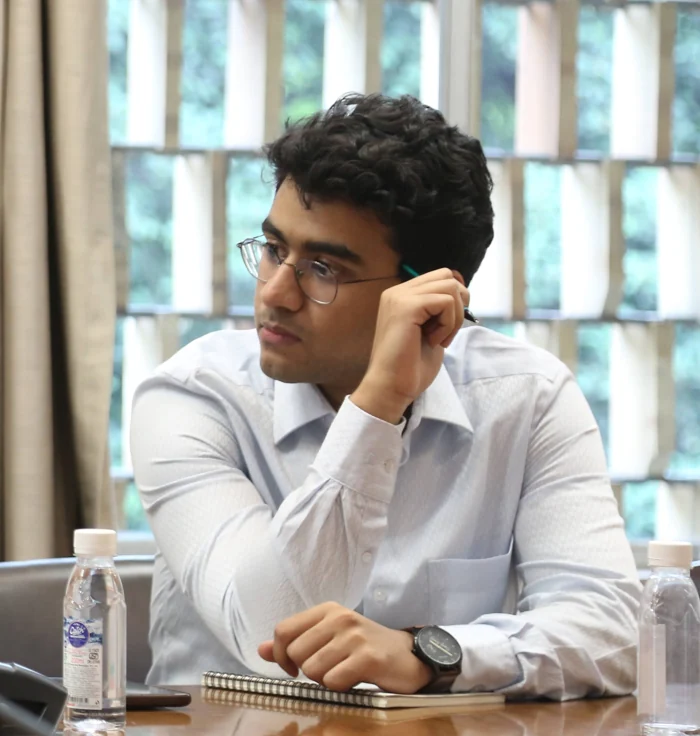
Vidur Kumar

Vidur Kumar

Research Affiliate

Vidur Kumar holds an MA in International Relations from Johns Hopkins University's School of Advanced International Studies (SAIS). His interests focus on AI governance, national security, and how middle powers can shape the development and oversight of advanced AI. His research has examined South Korea's AI strategy and India–US semiconductor cooperation. He previously worked as a Programme Executive at the Ananta Aspen Centre, supporting international policy dialogues, and served as an Assistant Editor at the SAIS Review of International Affairs.

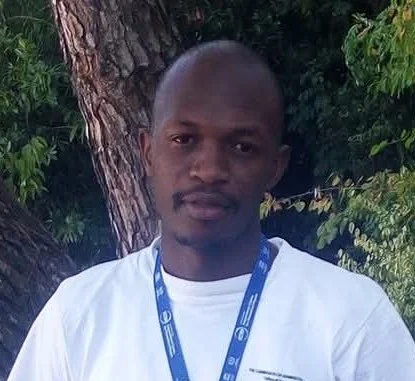
Allan Ochola

Allan Ochola

Research Affiliate

Allan is an AI safety researcher working at the intersection of AI evaluation, mechanistic interpretability, and biological AI risk. His research focuses on developing reliable methods for assessing model capabilities and understanding the limitations of existing evaluation approaches.

His work spans biological capability evaluation, protein foundation model benchmarking, and sparse autoencoder interpretability. He designs reproducible experiments to investigate where models and evaluations break down, identify confounding factors, and assess the robustness of evaluation findings across different conditions.

Allan has also led the development and deployment of AI-assisted decision-support systems across six Kenyan counties. With a background in computational research and technology governance, he works to connect rigorous technical evaluation with practical decisions about AI safety, accountability, and oversight. He is finalising his Master in Microbiology at Kenyatta University in Kenya.

Sudhiksha Kandavel Rajan

Sudhiksha Kandavel Rajan

Research Affiliate

Sudhiksha Kandavel Rajan is an MS in AI student at Northeastern University, an AI Security Fellow at the Heron AI Security Fellowship, and a Fellow in MIT AI Alignment's Hermes research fellowship. She works on agentic monitoring and oversight, with a focus on the reliability of AI safety evaluations. She's especially interested in how we build evaluations of autonomous agents that stay trustworthy as the agents get more capable.

Kara Schneider

Kara Schneider

Research Affiliate

Kara Schneider is a Research Affiliate at Syntony, specializing in AI governance, emerging technology security, and international human rights law. Her research examines the intersection of artificial intelligence, institutional accountability, and the protection of human identity and historical testimony, with particular attention to synthetic media, evidentiary integrity, and emerging technological risks.

Previously, Kara worked with UNESCO's Social and Human Sciences Sector in Paris, supporting initiatives on scientific freedom and the safety of scientists, and with International Bridges to Justice in Geneva on international justice and human rights programming.

She holds an MSc in International Relations and International Law from the University of Aberdeen and an MSc in Human Rights and Data Science from the American University of Paris. She is currently pursuing an Advanced Master in European Governance at Vrije Universiteit Brussel, specializing in foreign and security policy.

Her current research explores anticipatory governance for emerging technologies, including AI assurance, quantum computing, and the protection of sensitive historical records against AI-enabled manipulation.

Dr. Csaba Tóth

Dr. Csaba Tóth

Research Affiliate

Dr. Csaba Tóth is a political scientist from Budapest, presently working at the intersection of politics and AI. He examines how political incentives, public opinion and institutions shape AI's future—and what it takes to make desirable outcomes politically possible. He also works as a special advisor and teaches at the Central European University Democracy Institute Leadership Academy.

He brings more than twenty years of experience across government, campaigns, European politics, and academia. He co-founded Hungary's Republikon Institute, served as Chief of Staff to Katalin Cseh MEP, then a Vice-President of Renew Europe, and was an elected board member of the European Liberal Forum. He has been advising leaders and political campaigns for 15+ years. He taught political science at Eötvös Loránd University. His books and essays examine political institutions, campaigning and even the politics of science fiction.

Umar Zafar

Umar Zafar

Research Affiliate

Umar Zafar is a Pakistani AI policy researcher and nonprofit founder based in Washington, DC. He holds an MA in International Relations from Johns Hopkins University's School of Advanced International Studies, where he was a Public Service Fellow. He has contributed to the Center for AI and Digital Policy, the SNF Agora Institute and is a fellow at Sentient Futures working on alternative proteins and AI. Umar founded Daadras Foundation, a nonprofit supporting education, humanitarian relief, and peacebuilding in Pakistan. Across his research and public service, he asks whose knowledge informs policy, whose interests it serves, and how institutions can become more accountable to the communities they affect.

Good questions bring
people together.

Explore opportunities