syn·to·ny noun

Syntony.

The science of
being in tune.

An old word for a precise relationship.
A name for the work we believe matters.

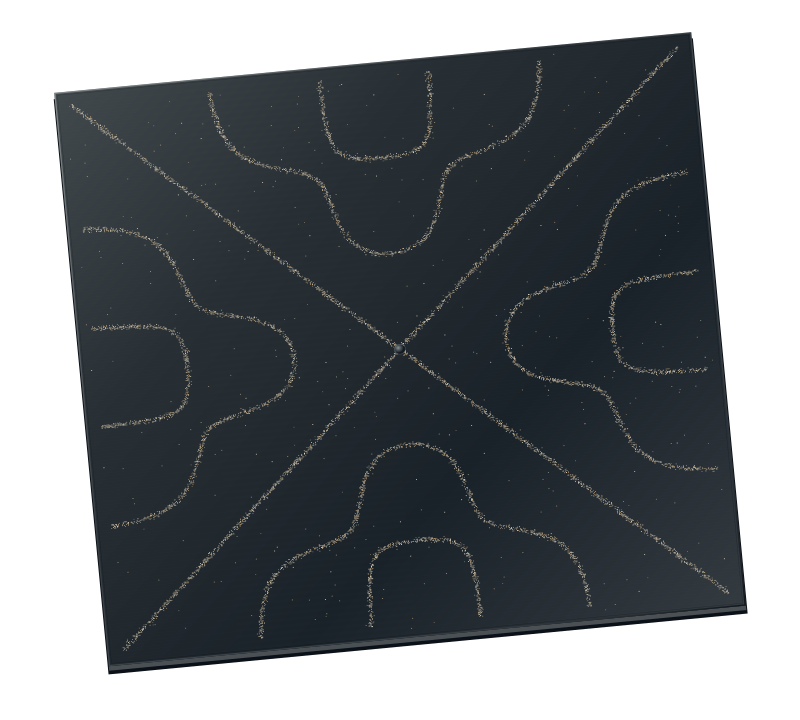
Sand tracing the nodal lines of an idealized vibrating square plate
Sound, made visible.A study in standing waves.

Inspired by Chladni’s experiments with sound and vibrating plates.6

The wordFrom agreement to resonance

Before it was
our name,
it was a relationship.

A correspondence
of frequencies.

Syntony comes from the Greek syntonia, meaning agreement, through syntonos: in harmony. The roots connect syn-, together, with tonos, voice or pitch.1

In its technical sense, it describes systems tuned to matching frequencies. The idea became especially important in wireless communication, where a receiver had to respond to the signal intended for it.2

In tune does not mean identical. Oscillators can share a frequency while retaining a different phase.3

syntogether
tonosvoice · pitch
A relationship,
made meaningful.
The physicsListen. Tune. Understand the response.

A small input.
A remarkable response.

Sound, electric circuits, and mechanical structures can all exhibit resonance. What matters is how the input relates to the system receiving it.

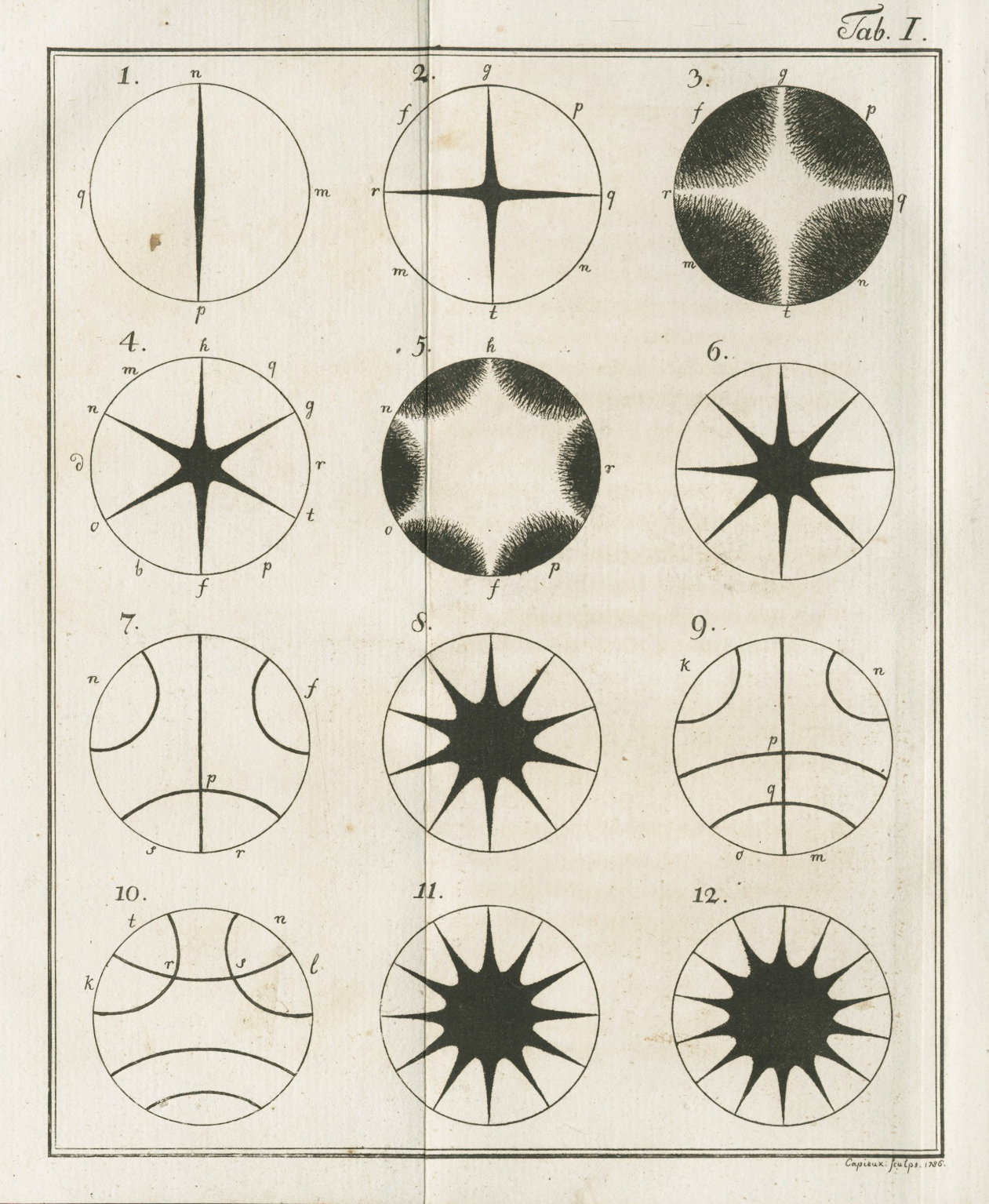
Twelve intricate nodal patterns from Chladni’s original 1787 study of sound
Ernst Chladni, 1787Sound leaves a signature.

Max Planck Institute for the History of Science, via The Public Domain Review. Scan: CC BY-SA 3.0 DE.

Acoustics

A response across the air.

Strike one tuning fork and another, suitably arranged and tuned to the same frequency, can begin to sound. Energy travels through the air. The response depends on the source, the receiver, and the conditions connecting them.4

Electricity

A signal worth receiving.

Early wireless engineers tuned circuits so a receiver would respond strongly to the intended transmission. Electrical resonance helped turn a field of signals into useful communication.2

Engineering

Amplification needs judgment.

Near resonance, a modest periodic input can produce a large response. Engineers use this behavior where it helps and control it where it harms. Damping changes what a system amplifies.5

A connection across disciplines

From a vibrating fork
to a world in contact.

In his 1909 Nobel lecture, Guglielmo Marconi explained the tuning of wireless circuits by comparing them with tuning forks. The receiving circuits needed to resonate with one another and match the transmitted waves.

An acoustic analogy helped explain an electrical technology. Different disciplines, connected by an underlying relationship.

Read the original lecture
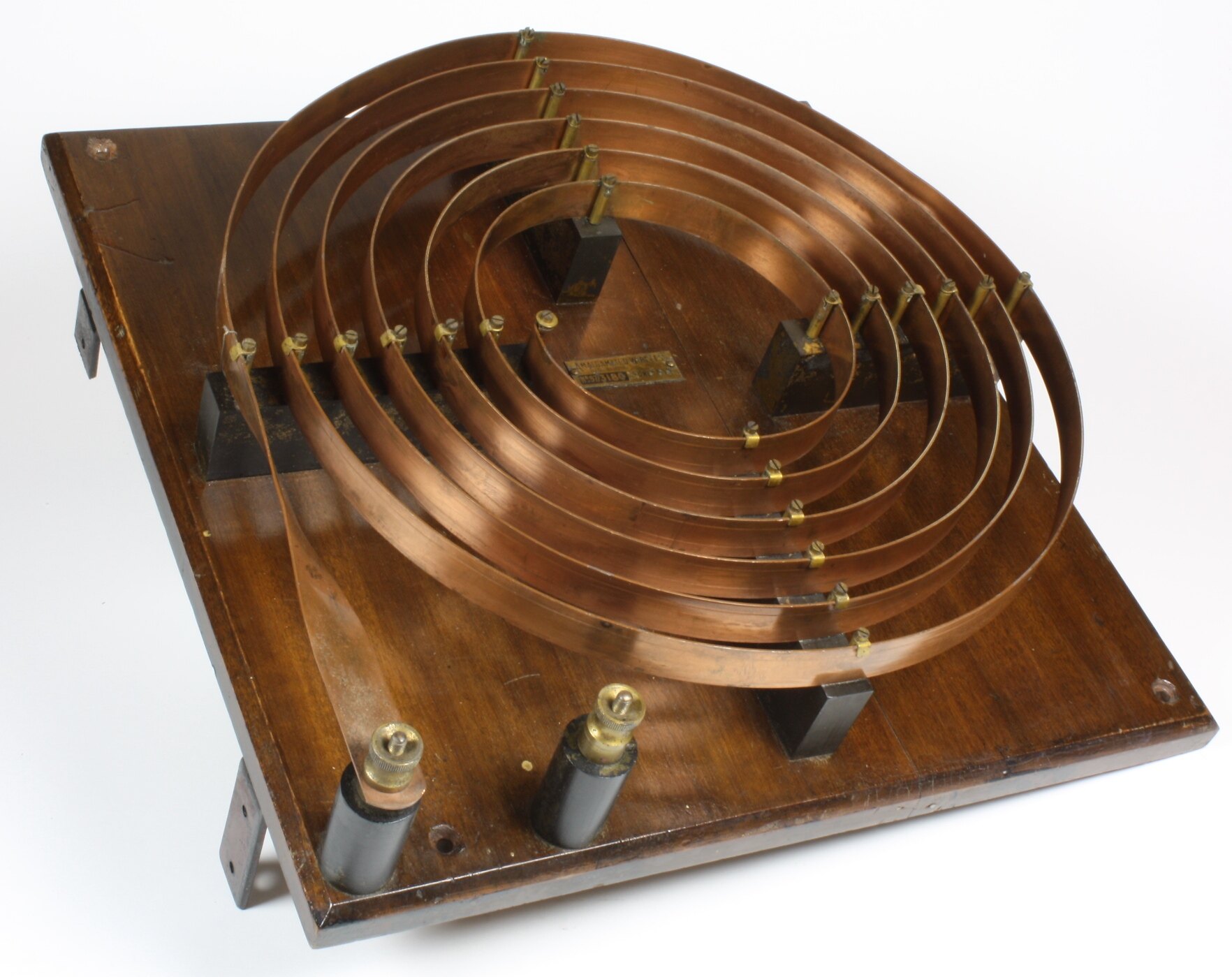
Copper strip high-frequency tuning coil on a walnut base, made by AWA between 1914 and 1920
High-frequency tuning coil
AWA, 1914–1920
Museums Victoria

Photograph: David Demant / Museums Victoria. CC BY 4.0. Displayed with background blending.

Why SyntonyOur interpretation of the name

Understand the system.
Change what follows.

An AI model never acts in an empty world.

It encounters tools, data, people, incentives, institutions, and adversaries. Those relationships shape what the system does—and what happens when it fails.

We chose Syntony because our work brings those relationships into focus. Technical testing reveals the behavior. National security and systems thinking establish the context. Governance turns the evidence into decisions, responsibilities, and controls.

The aim is a coherent response:
the right evidence, reaching the right people,
with a practical path to action.

How we put that into practice
The person behind the practiceExperience across research, industry, and government
Nathan Heath, founder of Syntony
Nathan HeathFounder, Syntony

Frontier AI.
National security.

Nathan Heath is a decision scientist, AI security practitioner, and national security expert with over 14 years of experience.

He founded Syntony to expose how AI systems fail and give the institutions deploying them the evidence to act.

Before founding Syntony, he spent more than six years as a decision scientist supporting the U.S. Department of War, focused on emerging technology risk, systems thinking, and security cooperation. He has also spent three years red-teaming for OpenAI and Anthropic through their private safety programs.

His experience spans government, industry, and academia, including roles at the U.S. Department of State, Harvard Law School, the Hudson Institute, and technology startups focused on Europe and Latin America.

He regularly consults, writes, and speaks on AI safety and security.

  • Truman National Security Fellow
  • Expert Advisor to the Cloud Security Alliance on catastrophic AI risk
  • Former fellow, Hertog Foundation and BlueDot Impact
  • M.A. in Law and Diplomacy, The Fletcher School

Nathan’s work has appeared in venues including UNIDIR, NeurIPS, the University of Cambridge, King’s College London, War on the Rocks, PRISM, and GNET.
Bring the hard question.

Let’s find
what matters.

Discuss a project

Notes on the word & the science

  1. The word

    Merriam-Webster: syntony · Greek derivation. Collins: syntony · Technical meaning.

  2. Tuned wireless

    Guglielmo Marconi, Nobel Lecture, 1909 · See printed page 203 for his comparison of electrical resonance and tuning forks. Nobel biography · The 1900 patent for tuned telegraphy.

  3. Frequency & phase

    NIST: syntonization and synchronization · Frequency matching is distinct from clock synchronization. NIST metrology notes · Equal frequency does not require equal phase.

  4. Sympathetic vibration

    BCIT Physics: matching tuning forks · A demonstration of energy transfer and the effect of detuning.

  5. Resonance & damping

    MIT OpenCourseWare: frequency response and practical resonance · How damping changes the response near resonance.

  6. Making sound visible

    E. F. F. Chladni, Entdeckungen über die Theorie des Klanges, 1787, Tab. I. Max Planck Institute for the History of Science, via The Public Domain Review. Underlying work in the public domain; scan CC BY-SA 3.0 DE. Original scan preserved.

  7. The historical instrument

    High-frequency inductance coil, AWA, 1914–1920 (ST 21413). Photograph: David Demant / Museums Victoria, CC BY 4.0. This later instrument illustrates the use of tuning coils; it is not Marconi’s original apparatus.

The interactive plate uses idealized square standing-wave modes inspired by Chladni’s experiments. The animation illustrates nodal patterns; the historical plate and tuning coil are archival images credited above.